001 / CUIJK
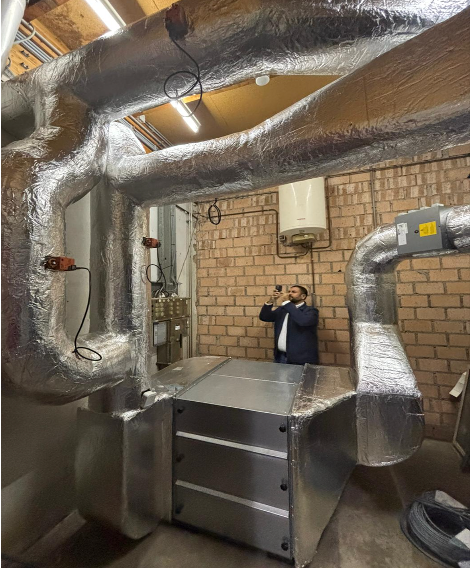
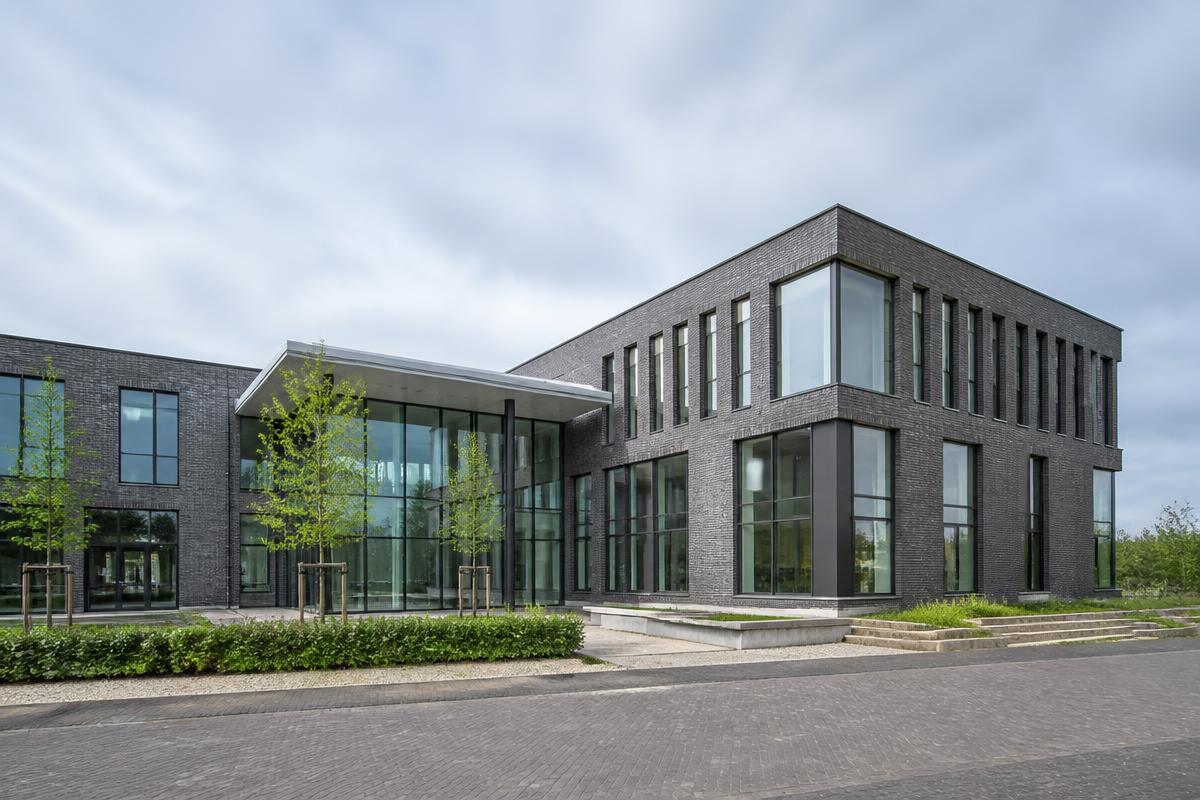
TEMA Fine Food Office
Cuijk, the Netherlands · Live Deployment
- CO₂ below 800 ppm
- 99.98%
- Energy label
- G → C
- Energy use
- 643 → 224.86 kWh/m²·yr
- CO₂ emissions
- 121 → 42.44 kg/m²·yr
Big news: Maxairea is nominated for the KVK Innovation Top 100 2026 — voting is open until 19 October
Maxairea filters CO₂ out of supply air, so HVAC systems need less outdoor air — cutting heating, cooling and fan energy while maintaining excellent indoor air quality.
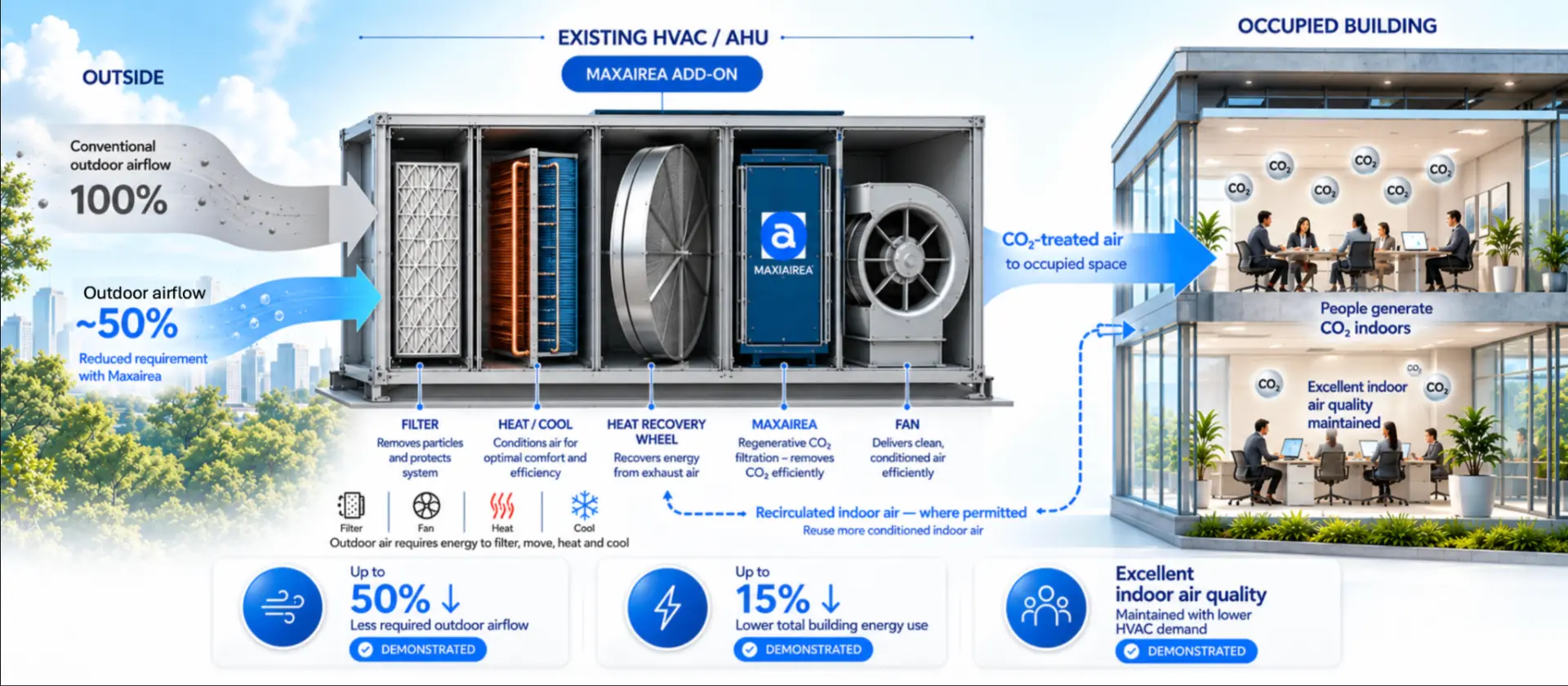
It happens in four simple steps.
Every person in the building adds CO₂ to the air, all day long.
The only way to get the CO₂ down is to dilute it with fresh outdoor air.
All that outdoor air has to be heated, cooled and pushed around by fans.
Conditioning ventilation air can be up to a quarter of a building's energy bill.
Ventilate less and people notice. Ventilate more and the bill grows. That is the trade-off we remove.
One change at the air-handling unit, four things you get back.
CO₂ stays low all day, so meeting rooms and busy floors stay comfortable.
Class A air at TEMA Fine FoodLess outdoor air means less heating, less cooling and less fan power.
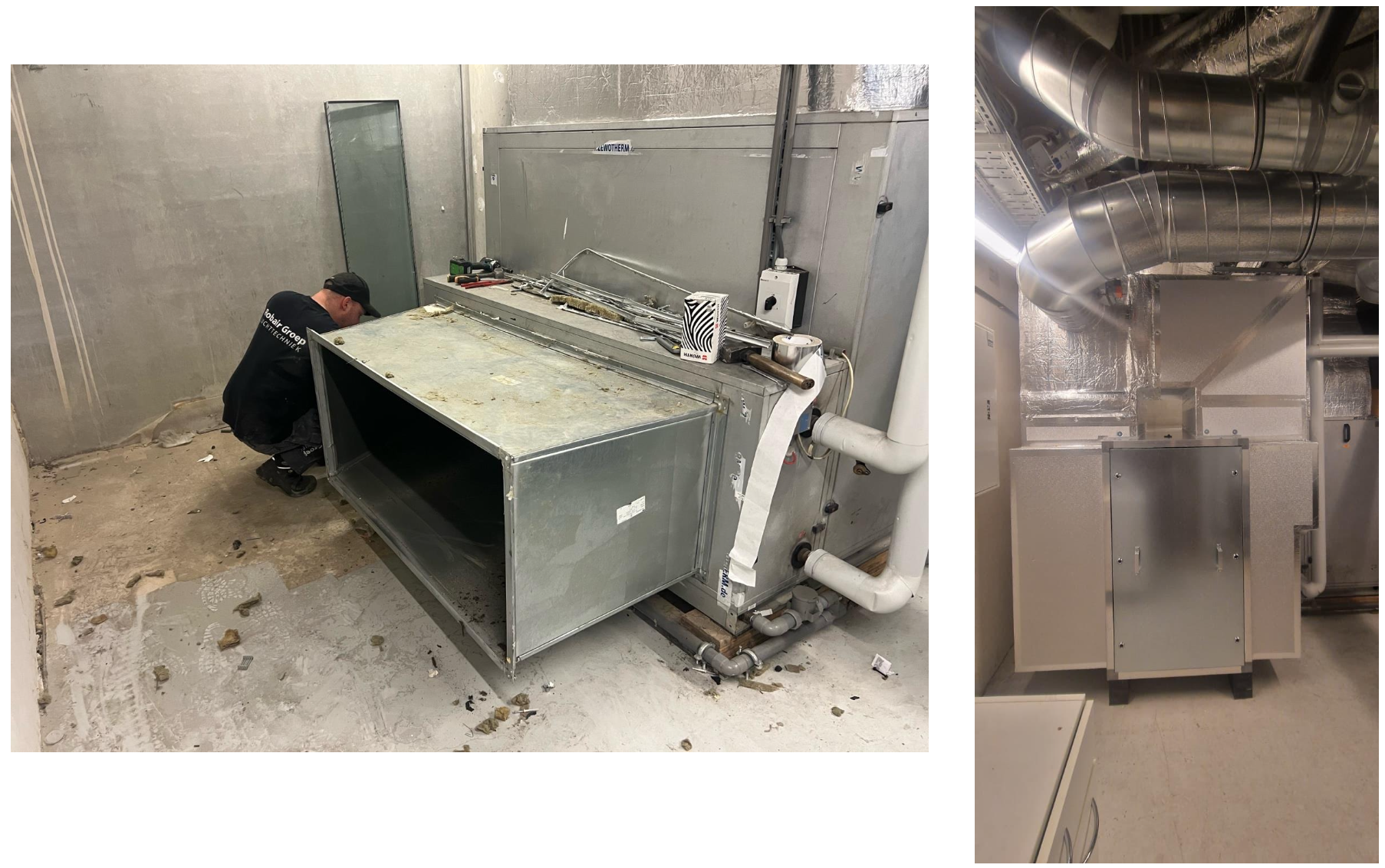
Up to 15% lower energy useWe add the unit to your existing air handler in the technical room. No new ducts.
Retrofitted at SPIE, ElslooThe CO₂ filter cleans itself while it runs, so there is no cartridge to swap.
Regenerative by designMaxairea removes CO₂ directly from building air using regenerative filtration and intelligent heating, ventilation and air conditioning (HVAC) control. By reducing the amount of outdoor air needed specifically for CO₂ dilution, Maxairea helps avoid unnecessary overventilation while maintaining high indoor air quality — lowering heating, cooling and fan energy demand.
Full outdoor-air volume heated, cooled and moved to dilute CO₂.
Up to 50% less outdoor air to condition, with 24 m³ of fresh air per person per hour always retained.
Run your numbers in the savings calculator and get a first estimate in minutes.
We separate what has been measured from what has been calculated. Every figure below carries its evidence level.
You share building type, occupancy, operating hours, ventilation design and current energy use. We establish a measured baseline.
You receive a building-specific view of achievable outdoor-air reduction, energy saving, indoor air quality impact and installation approach.
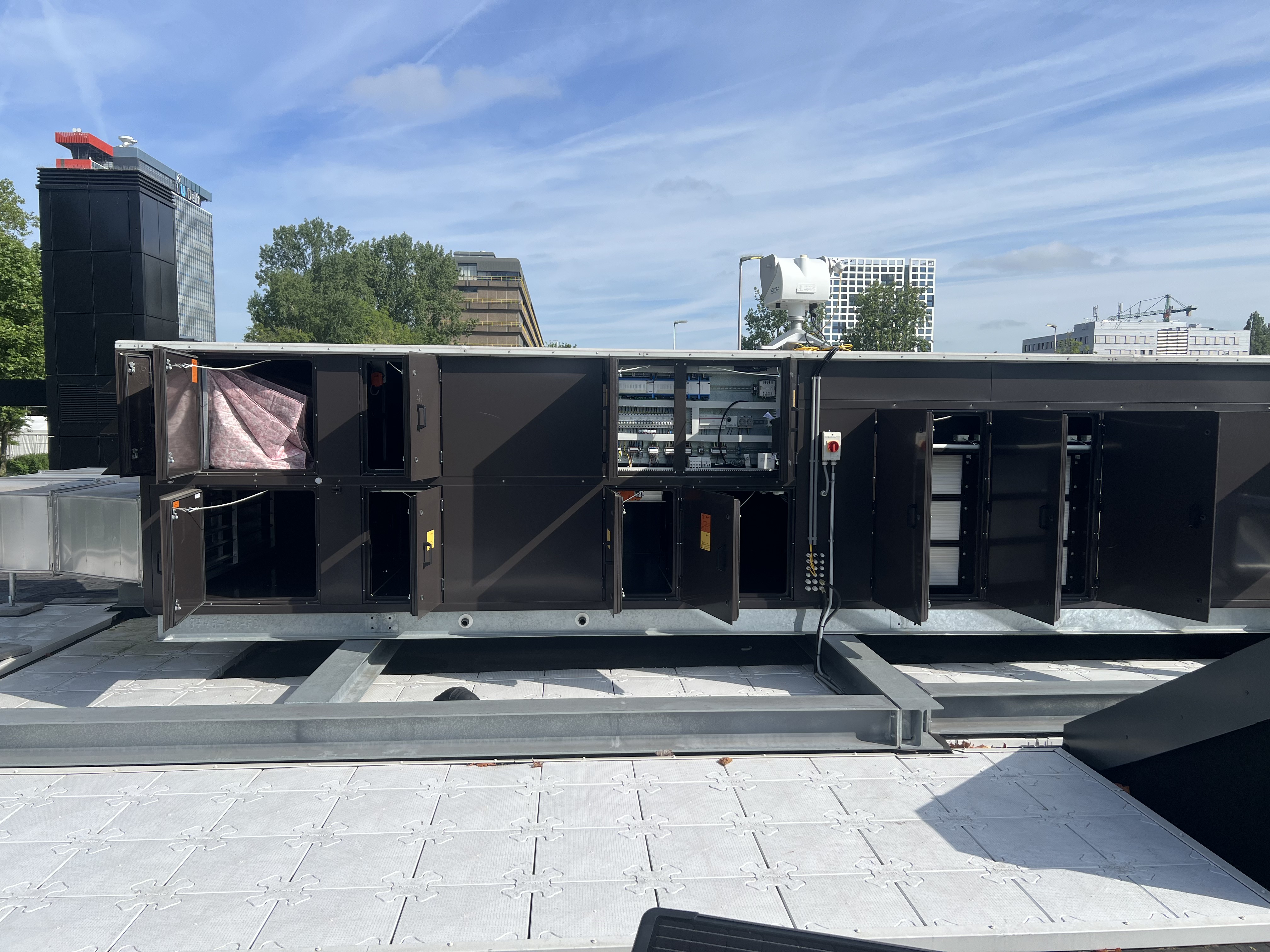
We integrate the system into your air-handling unit around your operating schedule, commission it, and measure performance against the baseline.
Dense meeting rooms and peak-hour occupancy driving oversized ventilation.
Guests pay for comfort — savings cannot come from running the system less.
CO₂ levels affect concentration; Frisse Scholen sets clear IAQ expectations.
Very high occupancy in short bursts, with large ventilation swings.
Long operating hours and large conditioned volumes.
Strict air-quality requirements alongside energy-performance obligations.
Maxairea has been nominated for the Chamber of Commerce Innovation Top 100 2026. Public votes count for 20% of the final result, and voting is open until 19 October. We are proud of the nomination and grateful for every vote of support.
In 2026, TNO reviewed a number of scientific publications for Maxairea on the potential relationship between indoor CO₂ concentrations and the infectivity of SARS-CoV-2 in aerosols. The key findings and referenced scientific sources are summarised in the accompanying reports. Controlled laboratory studies indicate a possible mechanism, but this has not been validated as an infection-control benefit in occupied buildings.
Maxairea has been named a finalist for the Energy Innovation Award 2026, recognising our regenerative CO₂ filtration technology for cleaner air and lower building energy use. The award will be presented at Vakbeurs Energie, Brabanthallen Den Bosch, on 6 October.
No. Clever Air Care is added to a suitable existing air-handling installation. The building assessment confirms how it integrates with your specific system.
Engineering calculations indicate up to 15% of total building energy use in high-occupancy buildings with long operating hours. Your result depends on occupancy, operating hours, climate, ventilation demand and the current efficiency of your HVAC. We will not quote a figure for your building before the assessment.
No. CO₂ is removed rather than diluted, and the controller enforces a minimum of 24 m³ of fresh air per person per hour at all times. IAQ is measured continuously and reported.
Installation takes place in the technical room and is planned around your building's operating schedule. The filter is regenerative, so there is no consumable media to replace as part of routine HVAC maintenance, subject to the final system design and service agreement.
Yes. Every project uses a pre-installation measured baseline and post-installation verification of CO₂, airflow and HVAC energy consumption, so the improvement is documented rather than asserted.
A building assessment shows whether maxairea Clever Air Care product suits your property, what outdoor-air reduction is realistic, and what the installation involves — before you commit to anything.
A free assessment shows whether Maxairea suits your building, what outdoor-air reduction is realistic, and what installation involves — before you commit.
Project results, research updates and product milestones — a maximum of one email per month. Unsubscribe at any time.
By signing up you agree that we store your email address to send you Maxairea updates. See our privacy policy.